How to Do a Background Check on an Online Date (2026 Guide)
Learn how to run a background check on someone you met online. From photo verification to social media searches, protect yourself before meeting.
Posted by
 Luka Tim
Related reading
How to Verify Dating App Photos Before Meeting Someone (2026 Guide)
Protect yourself before meeting a dating app match. Learn how to verify their photos using AI reverse face search, spot edited images, and follow a pre-date safety checklist.
How to Verify Someone's Identity Online Using Their Photo (2026)
Learn step-by-step how to verify someone's real identity online using just their photo. AI facial recognition makes identity verification fast and reliable.
How to Find Someone's Real Name from Their Photo (2026 Guide)
Need to find someone's real name using only their photo? Learn how AI facial recognition can identify unknown people and reveal their real identity.
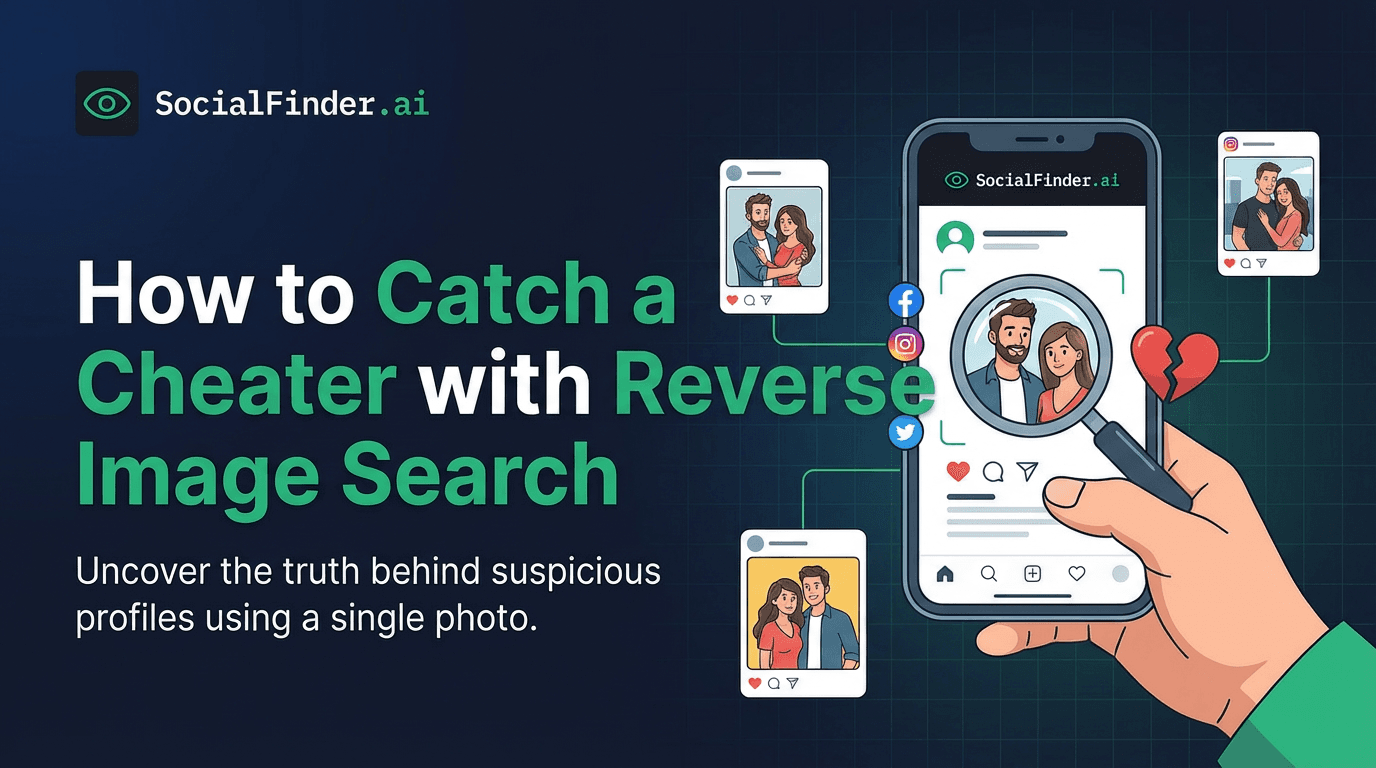
You've matched with someone online. The conversation is going well. They seem interesting, attractive, and surprisingly normal. Now comes the question every safety-conscious person asks: should you do a background check before meeting them in person? The answer is an unequivocal yes.
Running a background check on an online date isn't about paranoia—it's about basic personal safety. You're about to meet a stranger whose entire identity, as far as you know, is based on what they chose to tell you on a dating app. A quick background check can confirm they are who they say they are, reveal potential red flags, and give you peace of mind before that first date.
This step-by-step guide covers everything from photo verification to social media cross-referencing, with practical advice on what to look for and where to draw the ethical line.
Why Background Checks Are Essential for Online Dating
Consider what you actually know about someone you've only met on a dating app: a first name (which could be fake), a few photos (which could be stolen), a short bio (which could be entirely fabricated), and a text conversation (which reveals only what they want you to see). That's the entirety of your information before potentially meeting this person alone.
- Safety: A background check can reveal criminal history, restraining orders, or patterns of behavior that would make meeting unsafe.
- Identity verification: Confirming someone is a real person with consistent online and offline identities protects you from catfishing and scams.
- Relationship status: Many people on dating apps are secretly married or in committed relationships. A quick search can reveal this.
- General honesty: If someone lied about their job, education, or living situation, a background check can uncover these discrepancies before you're emotionally invested.
Step 1: Photo Verification With SocialFinder
The very first thing you should do is verify their photos. This single step catches the majority of fake profiles, scammers, and catfishers.
Upload their dating profile photo to SocialFinder's identity verification tool. The AI facial recognition engine will search across thousands of platforms to find where that face appears online. Here's what the results can tell you:
- Photos match real social media profiles: Great sign. The person exists, and their photos are genuinely theirs. Cross-reference the name, location, and details with what they told you on the dating app.
- Photos match a different person entirely: The photos are stolen. This is a catfish or scammer. Cease communication immediately.
- Photos appear on stock photo sites: Definitely fake. Report the profile to the dating platform.
- Photos match zero results anywhere: Potentially AI-generated. Proceed with extreme caution and insist on a video call.
Try SocialFinder.ai Now
Upload a photo and see how our AI facial recognition finds social media profiles in seconds.
Try It Now
Upload a photo and see how SocialFinder.ai works in seconds
> Upload a Face. Find Their Accounts.
Drop a photo. Get answers in seconds.
or click to browse files
Step 2: Google Their Name and Location
Once you have their real name (confirmed through the photo verification step), run a simple Google search combining their name with their claimed city or workplace. This can surface:
- LinkedIn profiles confirming their job and professional background
- News articles or press coverage (both positive and negative)
- Professional websites or portfolios
- Public records, court documents, or legal proceedings
- Social media profiles that add context to who they are
A person who is truly who they claim to be will have a consistent digital trail. Their LinkedIn will match what they told you about their career, their social media will show a life consistent with what they've described, and their location will check out.
Step 3: Social Media Cross-Referencing
SocialFinder's deep username search across 3,000+ platforms is particularly valuable for this step. Once you have a username or name from the initial search, the tool scans for matching accounts across social media, forums, gaming platforms, and other sites.
What to look for when reviewing their social media:
- Account age: How long have their social media accounts existed? Established accounts with years of history are a good sign. Brand-new accounts created around the same time as their dating profile are suspicious.
- Friend/follower count and engagement: Real people have real interactions—comments from friends, tagged photos, shared memories. Fake profiles tend to have low engagement and few genuine interactions.
- Consistency: Do their interests, lifestyle, and personal details match what they told you? If they claimed to be a software engineer in Chicago but their Facebook shows them as a student in another state, something doesn't add up.
- Relationship status: Check for any indicators of a current relationship—couple photos, relationship status (if public), or comments from a partner.
Step 4: Public Records (If Applicable)
Depending on your jurisdiction, certain public records may be freely searchable:
- Court records: Many counties offer free online access to civil and criminal court records.
- Sex offender registries: National and state sex offender registries are publicly accessible in the US.
- Marriage and divorce records: Some jurisdictions make these searchable online.
- Professional licenses: If they claim to be a doctor, lawyer, or licensed professional, you can verify this through state licensing boards.
Public records searches are more relevant for people you're getting serious about rather than a first date. The photo verification and social media steps above are usually sufficient for an initial safety check.
What You're Looking For
Throughout this process, you're checking for three things:
- Consistency: Does everything line up? Do their photos, name, job, location, and personal details remain consistent across platforms and match what they told you on the dating app?
- Red flags: Are there warning signs like a completely absent digital footprint, stolen photos, active dating profiles despite claiming to be exclusively interested in you, or criminal records?
- Verification of claims: If they said they're a doctor at a specific hospital, does the hospital's website list them? If they said they went to a particular university, does their LinkedIn confirm this?
How Deep Is Too Deep? Ethical Considerations
There's an important ethical line between reasonable safety verification and invasive surveillance. Here are some guidelines:
- Acceptable: Verifying photos are real, confirming basic identity details, checking publicly available social media profiles, searching public records.
- Borderline: Contacting their friends or colleagues, researching their ex-partners, diving deep into years of social media history.
- Too far: Accessing private accounts, paying for extensive surveillance, showing up at their workplace or home, using information to manipulate or control.
A good rule of thumb: if the information is publicly available and you're checking it for safety purposes, it's reasonable. If you're going to lengths that would make you uncomfortable if the roles were reversed, you've gone too far.
Paid vs. Free Background Check Options
- SocialFinder ($5 one-time): AI facial recognition + deep username search across 3,000+ platforms. Best for identifying someone from a photo and finding their complete online presence. Recommended as the primary tool.
- Google Search (free): Basic name and location search. Good for supplementary information but limited for identity verification.
- Social media manual search (free): Time-consuming but can reveal useful information if you have a name to work with.
- Public records databases (free to $$): County court records are often free. Aggregated background check services like BeenVerified or Spokeo charge subscription fees but provide compiled reports.
- Professional background check services ($30-100+): Services like Checkr or GoodHire provide formal background checks but are typically designed for employment screening and may be excessive for dating purposes.
Try SocialFinder.ai Now
Upload a photo and see how our AI facial recognition finds social media profiles in seconds.
Try It Now
Upload a photo and see how SocialFinder.ai works in seconds
> Upload a Face. Find Their Accounts.
Drop a photo. Get answers in seconds.
or click to browse files
Pre-Date Safety Checklist
Before meeting anyone from a dating app in person, run through this checklist:
- Verified their photos are real using SocialFinder or similar AI facial recognition tool
- Confirmed their name, job, and location are consistent across platforms
- Completed at least one video call to confirm they match their photos
- Told a friend or family member where you're going, who you're meeting, and when to expect you back
- Chosen a public location for the first meeting—never a private residence
- Arranged your own transportation so you're not dependent on your date
- Shared your date's profile or photo with a trusted person as a safety precaution
- Set up a check-in system with a friend (text at a specific time to confirm you're safe)
- Trusted your instincts—if something feels off, it's okay to cancel
Frequently Asked Questions
Is it legal to run a background check on a dating match?
Yes. Searching publicly available information about someone is legal. This includes social media profiles, public records, and reverse image searches. What you cannot do is access private accounts, hack into systems, or use the information for harassment, discrimination, or stalking.
What's the fastest way to verify someone from a dating app?
Upload their profile photo to SocialFinder. In approximately 30 seconds, you'll get results showing their other social media profiles, potential dating app accounts, and any matches across thousands of platforms. This single step verifies their identity more effectively than hours of manual searching.
Should I tell my date that I looked them up online?
This is a personal choice, but most dating safety experts encourage transparency. Many people find it reassuring when a date says, "I did a quick search to verify your profile—hope you don't mind." It signals that you take safety seriously, which is an attractive quality. If your date reacts negatively to basic safety verification, that itself may be a red flag.
What if the background check reveals something concerning but not criminal?
Trust your judgment. If you find that someone lied about their age, job, or relationship status, that dishonesty is a valid reason to reconsider meeting them. You don't owe anyone an explanation for prioritizing your safety. Small inconsistencies might warrant a direct question, but significant lies about core identity details are a deal-breaker for most people.
Try SocialFinder.ai Tools
Put what you've learned into action with SocialFinder.ai's powerful search tools. Start finding people, verifying identities, and uncovering social media profiles in seconds.
Find Someone from a Photo →
Upload a photo to find anyone's social media profiles instantly
AI Reverse Image Search →
Advanced AI-powered face recognition and reverse image search
Find Instagram User →
Discover Instagram profiles using facial recognition technology
Find Someone Online →
Search across social media platforms to find anyone online
AI People Search →
Smart AI-powered people search across the entire web
Track Social Media Account →
Monitor and track social media profiles and activity
Find TikTok User →
Locate TikTok profiles using photos and facial recognition
Find Secret Social Accounts →
Uncover hidden and secret social media accounts